 Mexican Media Brands
Emergency Calling Becomes Required in the EU
Automatic emergency calling functionality—“eCall”—becomes mandatory for all new cars and light commercial vehicles next Saturday (March 31) in the European Union.
#electronics #labor
.jpg;width=70;height=70;mode=crop)
Share


Automatic emergency calling functionality—“eCall”—becomes mandatory for all new cars and light commercial vehicles next Saturday (March 31) in the European Union. This will mean on the order of 20-million vehicles a year within the EU.
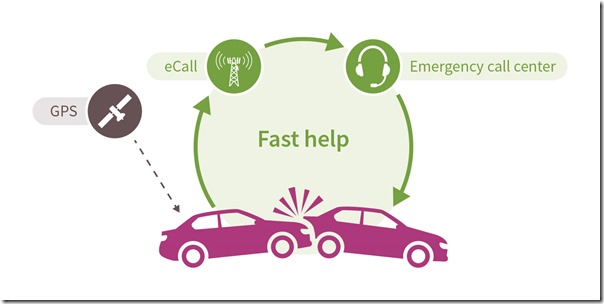
The objective is to reduce the time between an accident and the arrival of emergency services by as much as 50 percent. And by responding quicker, it is reckoned that fatalities can be reduced by about 10 percent.
According to semiconductor provider Infineon, while such automatic calling might otherwise require a SIM card, it has developed “eSIM” technology—10 years ago—that has the required functionality to make the connection.

These chips, such as the SLI 97 product family are much smaller than SIM cards, yet meet demanding automotive requirements, such as temperature fluctuations (-40° to 105°C).
The chips are installed in vehicles at the factory and can be managed remotely, including over-the-air updates.
Mercedes has been deploying the eSIM in its Mercedes me connect system.
RELATED CONTENT
-
Special Report: Toyota & Issues Electric
Although Toyota’s focus on hybrid powertrains at the seeming expense of the development of a portfolio of full battery electric vehicles (BEVs) for the market could cause some concern among those of an environmental orientation, in that Toyota doesn’t seem to be sufficiently supportive of the environment, in their estimation. Here’s something that could cause a reconsideration of that point of view.
-
Pacifica Hybrid Explained
Chrysler pioneered the modern-day minivan more than 30 years ago and has been refining and improving that type of vehicle ever since.
-
On Traffic Jams, Vehicle Size, Building EVs and more
From building electric vehicles—and training to do so—to considering traffic and its implication on drivers and vehicle size—there are plenty of considerations for people and their utilization of technology in the industry.