Mexican Media Brands
VCSEL LIDAR and Level 3 Autonomy
Sensor supplier reports it will be part of a Level 3 system on a Chinese model in 2022
#electronics
.jpg;width=70;height=70;mode=crop)
Share


High-performer sensor supplier ams has announced that a LIDAR system from Ibeo Automotive Systems, ibeoNEXT, which uses ams Vertical Cavity Surface Emitting Laser (VCSEL) technology, will be used in Level 3 automated driving systems for vehicles built by Chinese OEM Great Wall Motor in 2022.
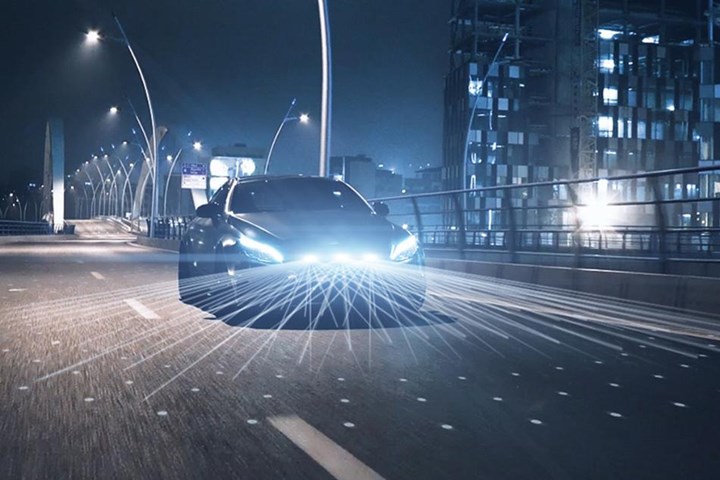
ams Vertical Cavity Surface Emitting Laser (VCSEL) technology for LIDAR. (Image: ams)
The ibeoNEXT system is based on solid-state LIDAR, meaning no mirrors or other moving elements are involved.
The VCSEL array is said to have “best in industry power density, conversion efficiency and pitch.” The VCSELs are also said to be able to differentiate in scan and flash applications, are less sensitive to individual emitter failures, are stable over temperature ranges and are easy to integrate.
The Ibeo system is said to provide “best-in-class large detection range, high resolution, and large vertical angle.”
All that said: What is fascinating is that if the Level 3 being referred to is the SAE Level 3—as in conditional automation, meaning that the driver doesn’t have to pay attention while the vehicle is traveling but must be able to take control of the vehicle should something go awry—then Great Wall is going to be offering something that many people think is difficult to achieve (e.g., if the driver looking at a Twitter feed and the vehicle detects a collision is imminent, will there be sufficient time and attention to get to the business of driving?).
RELATED CONTENT
-
On Advanced Design, Brain Function, and Quantum Computing
All about a solar sedan, a new GM design campus, Volvo’s impressive XC90, Porsche first-half sales, Nissan’s brain studies (!), Lucid Care for Lucid Air, and VW’s quantum computing
-
Pacifica Hybrid Explained
Chrysler pioneered the modern-day minivan more than 30 years ago and has been refining and improving that type of vehicle ever since.
-
Ford and Autonomy
Ford’s announcement last week in Silicon Valley came as something of a surprise.