Mexican Media Brands
A History Lesson for EVs: Developing an Infrastructure
As part of Volkswagen’s diesel-gate settlement, the German automaker could help jump-start the electric market in the U.S.
#hybrid #electronics
.jpg;width=70;height=70;mode=crop)
Share


The National Interstate and Defense Highways Act of 1956 in the United States was signed by President Dwight Eisenhower who had been a strong proponent of the creation of a transcontinental highway system 40 years earlier when he participated in the U.S. Army’s first cross-country convoy from Washington, DC, to San Francisco.
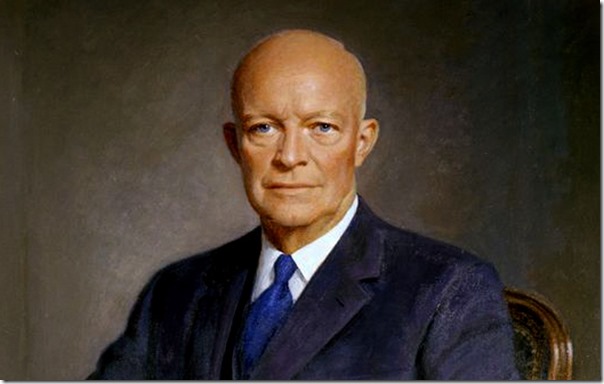
Then, when he was the Supreme Commander of the Allied Forces in Europe during World War II he experienced how the German autobahn facilitated transport in that country, which made him all the more interested in having good roads in the U.S.
When he made his State of the Union Address in 1954 he made it clear that a good highway system was one of his priorities, and he had to restate that in this 1956 State of the Union because Congress wasn’t making it happen.
When the Federal Highway Act of 1956 came out of a House-Senate conference committee, authorizing $25-billion to be spent between FY 1957 to 1969 for 41,000 miles of highway, and President Eisenhower got the bill to sign into law, he did so with some alacrity—he was in Walter Reed Army Medical Center at the time, recovering from an illness. He didn’t want to waste any time.
Building a New Infrastructure
When history is written about the transportation system in the U.S. circa right now, this week may be an important one.
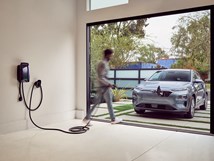
One of the biggest inhibitors of electric vehicles (EVs) and hydrogen-powered vehicles is infrastructure.
Simply put: the need for more fast electric charging stations and more gas stations (as in H2, not C8H18).
.jpg "eGolf")
According to the EPA, the settlement that Volkswagen reached with government “requires VW to invest $2 billion toward improving infrastructure, access and education to support and advance zero emission vehicles. The investments will be made over 10 years, with $1.2 billion directed toward a national EPA-approved investment plan and $800 million directed toward a California-specific investment plan that will be approved by CARB.”
And, according to CARB—the California Air Resources Board—Volkswagen, through the consent decree, is required “to invest $800 million dollars in ZEV infrastructure and access over a 10-year period in California. Volkswagen will be installing zero-emission vehicle fueling infrastructure (for both electric and hydrogen-powered cars), funding consumer awareness campaigns to increase the zero-emission vehicle market, and investing in projects such as car-sharing programs that will increase access to zero-emission vehicles for all consumers in California. These brand-neutral projects will support the next generation of zero-emission vehicles that will be sold in California, helping to grow the state’s burgeoning ZEV program, and will help lay the zero-emissions foundation for achieving the State’s air quality and climate goals.”
EVs Benefit from Diesel Blunder
In other words, the infrastructure build-out necessary for EVs and hydrogen vehicles, in California first, but presumably with scale will come proliferation, is going to be underwritten in the U.S. by Volkswagen AG. This is infrastructure that is going to be accessible to vehicles from General Motors and Toyota, Mercedes and Hyundai, Ford and Honda. And, yes, Volkswagen. But it will more than kick-start the process.
A silver lining to the diesel cloud.
RELATED CONTENT
-
Report: Fatal Uber Crash Blamed on Flawed Software
A self-driving Uber Technologies Inc. car struck and killed a pedestrian in March because of shortcomings in its control software, says The Information.
-
On Audi's Paint Colors, the Lexus ES 250, and a Lambo Tractor
From pitching a startup idea to BMW to how ZF is developing and using ADAS tech to a review of the Lexus ES 250 AWD to special info about additive at Toyota R&D. And lots in between.
-
Report Predicts Limited Impact of Autonomous Tech on Professional Drivers
A new study says autonomous vehicles will displace some taxi drivers but have only a modest impact on the number of truck driver jobs over the next 10 years.