 Mexican Media Brands
Honda’s Game-Changing Hydrogen Protocol
One of the cleverest approaches to vehicle refueling was the Phill system that Honda, through a third party, had made available for a previous generation natural gas powered Civic GX.
#hybrid
.jpg;width=70;height=70;mode=crop)
Share


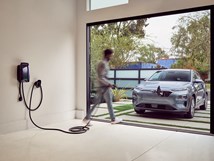
One of the cleverest approaches to vehicle refueling was the Phill system that Honda, through a third party, had made available for a previous generation natural gas powered Civic GX. Given that plenty of homes have natural gas piped in for hot water heating, a stove, a dryer, and/or a furnace, the Phill was readily provided with a source of natural gas. Plumb it into a garage, and the Civic GX owner could let the vehicle get fueled overnight.
While natural gas may be abundant in homes, and while hydrogen may be the most abundant element in the universe, Phill is gone and now Honda and other car makers are trying to figure out the M.O. for hydrogen fuel refueling.

Honda has recently put forth its latest idea in this regard: MC Fill. It is an enhanced fueling protocol for fast fueling with hydrogen.
According to Honda, MC Fill reduces 700-bar fueling times (that’s as in hydrogen under pressure of 10,000 psi) by up to 45% compared with comparable approaches. This means a vehicle could be refueled in less than three minutes.
The name “MC Fill” is not a clever moniker like Phill. Rather, the “M” stands for mass and the “C” for specific heat (yes, this is pretty much the realm of rocket science). Those are related to the capability of the system to absorb the heat generated during refueling.
The MC Fill protocol monitors those factors, as well as the dispenser outlet gas temperature and pressure, and then adjusts the gas flow based on those parameters in such a way as to have the fastest refueling time.
Steve Mathison, senior engineer at Honda R&D Americas in Torrance, CA, where an MC Fill pump was recently installed, said, “This new fueling protocol will allow FCEV [fuel cell electric vehicle] customers everywhere to realize short fueling times over a wide range of temperatures.”
This could make pure electric vehicles somewhat less compelling. Consider: a Tesla Model S with an 85 kWh battery pack has an approximate range of 300 miles at 55 mph. If the car is recharged at a Supercharger station, then it takes 20 minutes to get half-a-battery charge. So that means ~150 mile range. One could, conceivably, refill a hydrogen car six times with an MC Fill system in 20 minutes. The current Honda FCX Clarity FCEV has a 240-mile range.
MC Fill could be a game changer—once the price of fuel cell stacks comes way, way down.
RELATED CONTENT
-
How to Build a Military Vehicle from a Pickup Truck
A real piece of military gear. A real pickup that you can get at a Chevy dealership. A really remarkable story.
-
on lots of electric trucks. . .Grand Highlander. . .atomically analyzing additive. . .geometric designs. . .Dodge Hornet. . .
EVs slowdown. . .Ram’s latest in electricity. . .the Grand Highlander is. . .additive at the atomic level. . .advanced—and retro—designs. . .the Dodge Hornet. . .Rimac in reverse. . .
-
Aluminum Sheet for EV Battery Enclosure
As the number of electric vehicles (EVs) is about to increase almost exponentially, aluminum supplier Novelis is preparing to provide customers with protective solutions