 Mexican Media Brands
Royal Composites
While you might look at this picture and think, “Hmm, just a group of dressed-up people looking at some sort of unusually shaped object with a moderate amount of restrained interest”. . . . . .and while you wouldn’t necessarily be off the mark with that assessment, you might consider the picture somewhat differently know that: (1) The tall person (third from left) is the Duke of Cambridge, who could conceivably become the King of England (2) The object is a carbon fiber tub produced in the 7,000-square-meter facility they’re in, the brand-new McLaren Composites Technology Centre in Yorkshire.
.jpg;width=70;height=70;mode=crop)
Share


While you might look at this picture and think, “Hmm, just a group of dressed-up people looking at some sort of unusually shaped object with a moderate amount of restrained interest”. . .

. . .and while you wouldn’t necessarily be off the mark with that assessment, you might consider the picture somewhat differently know that:
(1) The tall person (third from left) is the Duke of Cambridge, who could conceivably become the King of England
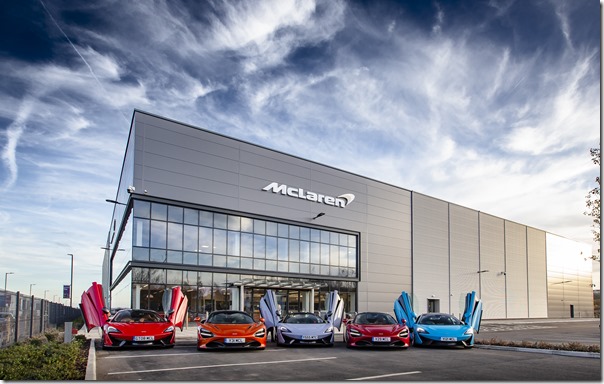
(2) The object is a carbon fiber tub produced in the 7,000-square-meter facility they’re in, the brand-new McLaren Composites Technology Centre in Yorkshire.
As you may know, all McLaren cars—for road or track or both—have featured carbon fiber chassis setups since 1981.
The company, which is in the midst of a program it calls “Track25,” which will have it launching 25 new or substantially revised lightweight cars in the near term, has decide to insource the production of its carbon fiber chassis, which led to this truly “Grand Opening.”
(To be fair, it is worth noting that in addition to the Duke and Duchess of Cambridge, HRH Prince Salman bin Hamad Al Khalifa, the Crown Prince of the Kingdom of Bahrain, was also in attendance. The Bahrain Mumtalakat Holding Company and TAG Group are the McLaren Group’s long-term majority shareholders, so there is undoubtedly keen interest on behalf of HRH regarding the £50-million production facility.)
RELATED CONTENT
-
GM Develops a New Electrical Platform
GM engineers create a better electrical architecture that can handle the ever-increasing needs of vehicle systems
-
On Fuel Cells, Battery Enclosures, and Lucid Air
A skateboard for fuel cells, building a better battery enclosure, what ADAS does, a big engine for boats, the curious case of lean production, what drivers think, and why Lucid is remarkable
-
The Koenigsegg Jesko Has An Amazing Engine
It is hard to believe that this is a vehicle in “serial” production with such extraordinary powertrain performance