 Mexican Media Brands
Conti Buys Stake in Lidar Startup
AEye’s long-range technology will complement existing short-range system
Share


Continental is enhancing its sensing capabilities for automated vehicle systems with an undisclosed investment in lidar specialist AEye.
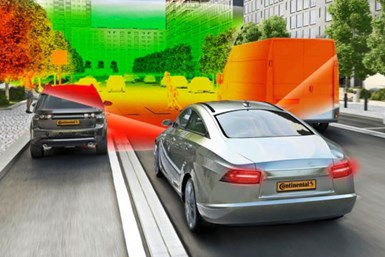
(Image: Continental)
As part of the deal, the companies will jointly develop a lidar system based on AEye’s long-range technology for use in Level 3 autonomous passenger and commercial vehicles.
Production applications are targeted for the end of 2024, starting in high-end cars.
Complementing Tech
Using multiple sensor types with redundant and complementary performance capabilities—including short- and long-range detection—is considered a key enabler for next-generation semi- and fully autonomous vehicles beyond today’s Level 2 systems.
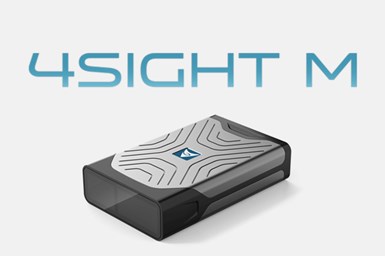
AEye 4Sight sensor (Image: AEye)
“ADAS solutions require a unique mix of performance, scalability, packaging and a long-term commitment to reliability and safety,” attests AEye CEO Blair LaCorte.
Conti, which also supplies cameras and radar sensors, has been developing its own short-range 3D Flash lidar since its 2016 acquisition of Advanced Scientific Concept’s imaging sensor business. The first application for that system is due to launch later this year.
Founded in 2013, Dublin, Calif.-based AEye is focusing on long-range lidar. The company says its system can detect vehicles as far away as 300 m (980 ft) and pedestrians at 200 m (660 ft)—or even small, low-reflective objects such as a brick at 160 m (520 ft).
How It Works
Lidar provides robust pixel-level detection, Conti notes.
The supplier’s Flash lidar offers 3D pixel images quickly and precisely by illuminating and capturing an entire scene in one pulse per frame of data.
AEye’s long-range lidar teams an amplifiable 1550-nm laser with patented feedback-controlled microelectromechanical system (MEMS), which the company says enables more than 1,600 points per square degree of resolution beyond 300 m.
The supplier, which introduced its fifth-generation 4Sight sensor earlier this year, claims its technology overcomes shortcomings (packaging and durability) in other MEMS lidar. The integrated system, which AEye describes as intelligent detection and ranging (IDAR), combines a laser, MEMS and receiver on a system-on-a-chip architecture.
Improved Capability
In addition to a cash infusion, Continental’s investment provides AEye with access to more engineering, development and manufacturing resources.
The startup previously has raised about $60 million in funding. Other investors include Airbus, Aisin, Hella and Intel.
For Continental, the deal enhances its current sensor portfolio and puts it a step closer to enabling full autonomous operation.
"We now have optimum short-range and world-class long-range lidar technologies with their complementary set of benefits under one roof," says Frank Petznick, head of Continental's advanced driver-assist systems business unit. "This puts us in a strong position to cover the full vehicle environment."
RELATED CONTENT
-
Multiple Choices for Light, High-Performance Chassis
How carbon fiber is utilized is as different as the vehicles on which it is used. From full carbon tubs to partial panels to welded steel tube sandwich structures, the only limitation is imagination.
-
When Automated Production Turning is the Low-Cost Option
For the right parts, or families of parts, an automated CNC turning cell is simply the least expensive way to produce high-quality parts. Here’s why.
-
On Electric Pickups, Flying Taxis, and Auto Industry Transformation
Ford goes for vertical integration, DENSO and Honeywell take to the skies, how suppliers feel about their customers, how vehicle customers feel about shopping, and insights from a software exec