

 Mexican Media Brands
Honda Re-Imagines and Re-Engineers the Ridgeline
When Honda announced the first-generation Ridgeline in 2005, it opened the press release describing the vehicle: “The Honda Ridgeline re-defines what a truck can be with its true half-ton bed payload capability, an interior similar to a full-size truck and the exterior length of a compact truck.” And all that said, people simply couldn’t get over the way there is a diagonal piece, a sail-shaped buttress, between the cab and the box.
#interior #electronics
.jpg;width=70;height=70;mode=crop)
Share


When Honda announced the first-generation Ridgeline in 2005, it opened the press release describing the vehicle:
“The Honda Ridgeline re-defines what a truck can be with its true half-ton bed payload capability, an interior similar to a full-size truck and the exterior length of a compact truck.”
And all that said, people simply couldn’t get over the way there is a diagonal piece, a sail-shaped buttress, between the cab and the box. Who cared if there were things like a 1,550-pound bed capacity and a 5,000-pound towing capacity.
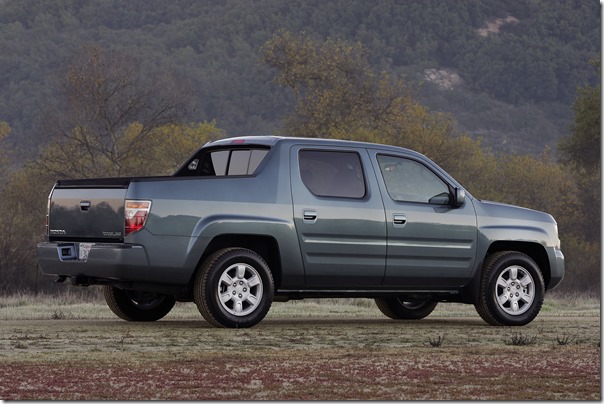
It doesn’t look like a truck!!! was the sense of things.
Well, not everyone, because as Jeff Conrad, senior vice president and general manager, Honda Division, points out in this edition of “Autoline After Hours,” there are 250,000 original Ridgelines still on the road of which 175,000 are being driven by their original owners.
But now there is a 2017 Ridgeline, the second generation, and make no mistake: this time it looks like a pickup truck:

And it is engineered to go right at the competitors in the midsize segment:
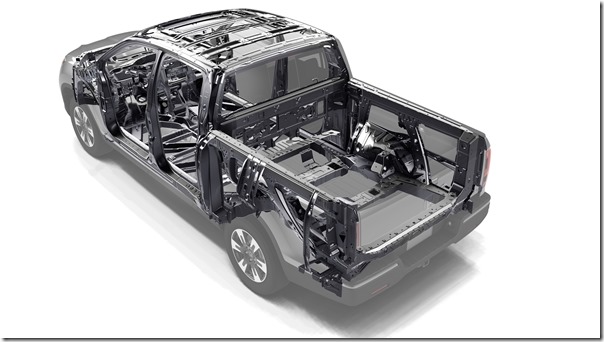
Jeff Conrad, Kerry McClure, the Ridgeline chief engineer, and Jim Loftus, performance lead on the truck, talk to Autoline’s John McElroy and me about everything from the market positioning to the underlying structure of the Ridgeline on the show that we shot in San Antonio, Texas, where the truck—and yes, it is a truck, not some sort of El Camino-like variant of an Accord—was put through its paces by John and me and other of our automotive colleagues.
Speaking of whom, later on the show we are joined by Joe Phillippi, president of AutoTrends Consulting, and Ken Gross, automotive historian. The four of us talk about a variety of current issues (and yes, even more about the Ridgeline).
And you can see it all here:
RELATED CONTENT
-
All About Acadia
One of the features of the 2017 GMC Acadia is, compared with the outgoing model, that it is some 700 pounds lighter.
-
Tesla Addresses Air Quality
When it comes to Tesla, things like “Ludicrous Mode” have a certain “we’re-not-taking-ourselves-too-seriously” aspect to them.
-
2016 Chevrolet Volt Premier
When the first-generation Chevrolet Volt appeared in 2010, it was almost more of a cause than it was a car.